After one previous lower-segment caesarean, both planned vaginal birth after caesarean (VBAC) and planned repeat caesarean can be reasonable options for many patients. The safest choice depends on the prior operation, current pregnancy and personal priorities.
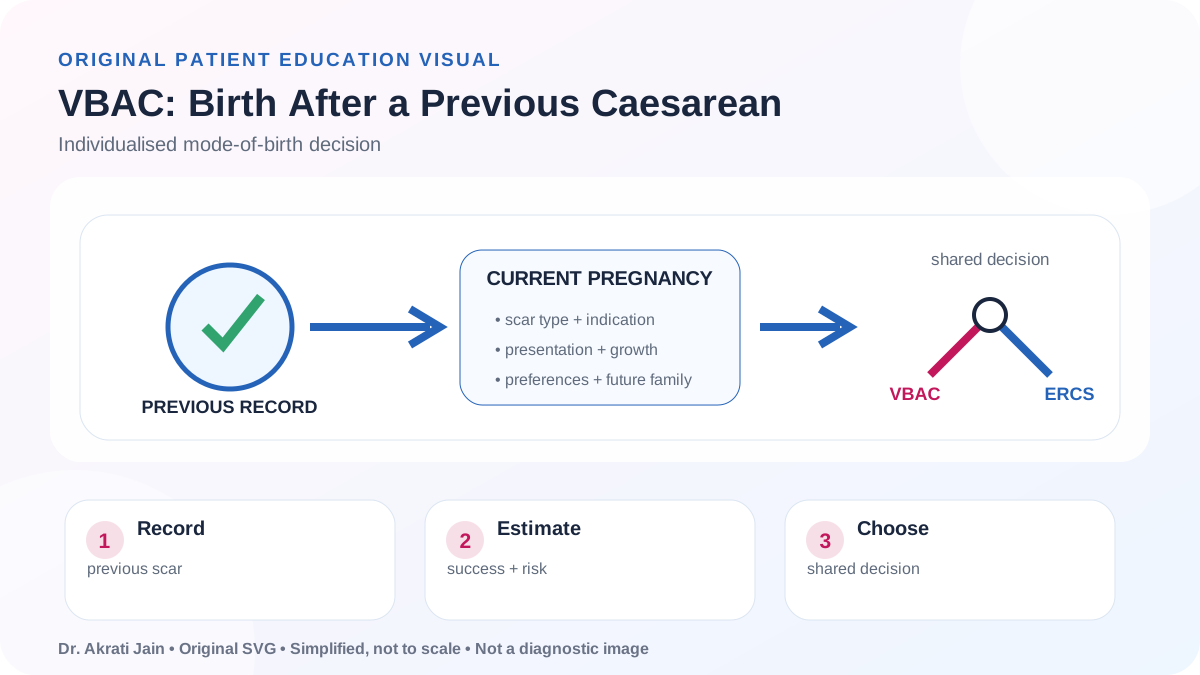
RCOG and NICE shared-decision framework
Current guidance frames VBAC and elective repeat caesarean as preference-sensitive choices rather than a universal rule.
- Review the previous operative note when possible, including uterine incision type, indication and complications. A classical uterine incision or previous uterine rupture usually makes planned VBAC inappropriate.
- Spontaneous labour has the highest VBAC success. Induction can be considered in selected patients but changes both success and rupture risk, so method and monitoring need senior discussion.
- Planned repeat caesarean is usually scheduled at or after 39 weeks unless another indication requires earlier birth.
- Future-family size matters because surgical adhesions and placenta accreta risk increase with repeated caesareans.
Factors favouring successful VBAC
Prior vaginal birth, especially prior VBAC, spontaneous labour, a non-recurring reason for the first caesarean and a normally grown head-down baby support success.
Factors such as no previous vaginal birth, need for induction, higher BMI, suspected large baby or repeated labour-arrest indication may lower—but do not automatically eliminate—the chance.
Benefits and risks of VBAC
Successful VBAC avoids abdominal surgery, usually shortens recovery and reduces cumulative surgical risk in future pregnancies.
The main rare serious risk is uterine-scar rupture. Continuous fetal monitoring is used because fetal-heart-rate change may be the earliest sign. Emergency caesarean and blood transfusion capability must be immediately available.
Benefits and risks of repeat caesarean
Planned repeat caesarean avoids labour-related scar rupture and offers a predictable date. It carries surgical risks including infection, bleeding, thrombosis, organ injury and a longer recovery.
Each additional caesarean can increase adhesions and the chance of placenta previa or accreta in future pregnancy. Babies born before 39 weeks have more transient breathing problems.
Labour and induction plan
Patients planning VBAC should contact the hospital when labour starts or waters break. Epidural analgesia is an option and does not mask the important signs used in monitoring.
If labour does not start, choices may include waiting, induction or repeat caesarean. The plan should specify which induction methods are acceptable and when progress will be reassessed.
A balanced decision uses three horizons
This birth
Probability of vaginal birth, scar safety, fetal presentation and current complications.
Recovery
Surgical recovery versus the possibility of emergency caesarean after labour.
Future pregnancies
Increasing caesarean number raises placental and surgical complexity over time.