Fibroids are benign growths arising from uterine muscle. They may be small and symptom-free or may cause bleeding, pressure, pain, anaemia or fertility-related concerns.
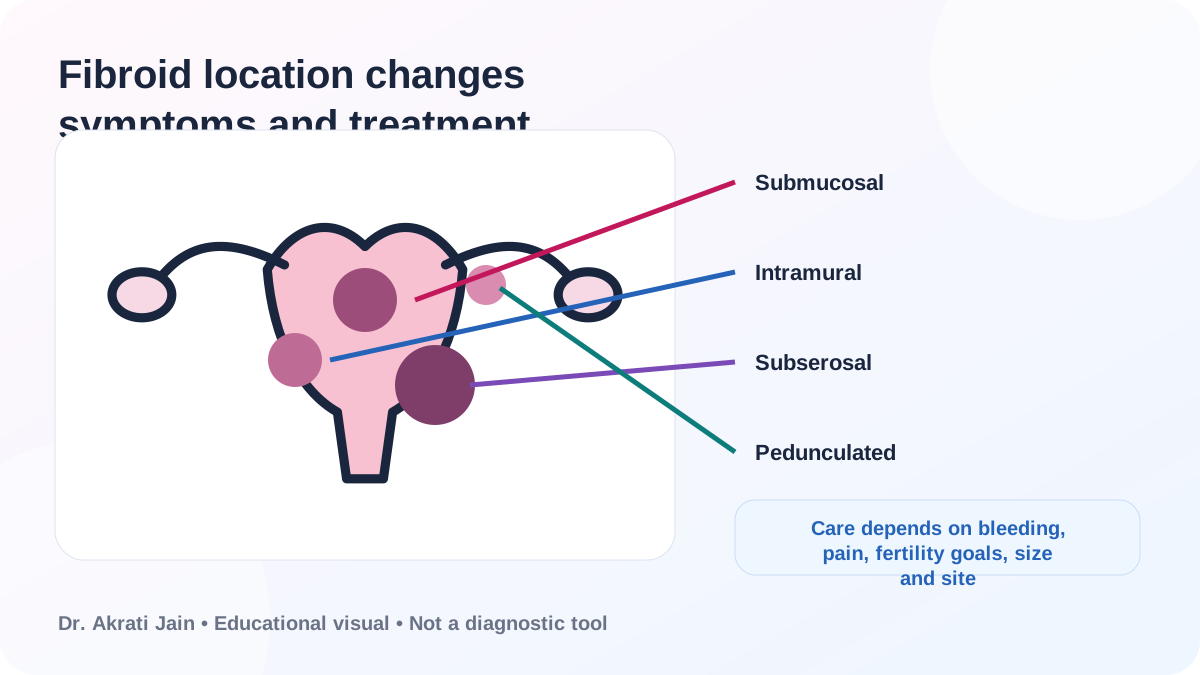
Choosing fibroid treatment by symptoms, location, and fertility goals
The same-size fibroid can have very different effects depending on whether it distorts the uterine cavity, sits within the muscle, or grows outward.
- Medication can reduce heavy bleeding or temporarily reduce fibroid-related symptoms, but the choice depends on anaemia, pain, contraception needs, and pregnancy plans.
- Hysteroscopy can remove fibroids that project into the uterine cavity; laparoscopic or open myomectomy may be considered for other locations and sizes.
- Uterine artery embolisation and radiofrequency ablation are uterus-preserving options for selected patients, but their implications for future pregnancy require individual counselling.
- Hysterectomy is definitive but ends fertility; it is not the automatic next step for every person with fibroids.
Possible symptoms
Fibroids can cause heavy or prolonged periods, anaemia, pelvic pressure, urinary frequency, constipation, abdominal enlargement, lower-back discomfort, pain during sex or fertility-related problems.
Many are found incidentally and cause no symptoms.
Diagnosis
A pelvic examination may suggest an enlarged or irregular uterus. Ultrasound is commonly used to assess fibroid size and location. Hysteroscopy, saline ultrasound or MRI may be advised in selected cases.
When treatment is considered
Treatment is generally considered when bleeding, anaemia, pain, pressure, infertility concerns or uncertainty about the diagnosis affects health or quality of life.
Observation may be reasonable for small or asymptomatic fibroids.
Treatment options
Options may include medication for bleeding or pain, hysteroscopic treatment for selected cavity fibroids, myomectomy, uterine-artery procedures or hysterectomy. Suitability depends on fertility plans and the number, size and location of fibroids.
How location changes fibroid management
Cavity distortion
Submucosal fibroids can affect bleeding and fertility even when relatively small, while large outer-wall fibroids may cause pressure without changing the cavity. The scan report should describe number, size and location.
Treatment trade-offs
Medical therapy may control bleeding but does not remove a fibroid. Myomectomy preserves the uterus but can involve bleeding, adhesions and later caesarean considerations. Uterine-artery embolisation and other procedures have different fertility evidence.
Preoperative optimisation
Correcting anaemia, mapping fibroids accurately and planning blood-loss reduction can improve safety before surgery.