Twin and triplet pregnancy needs additional surveillance because risks depend not only on the number of babies but on whether they share a placenta or amniotic sac. Determining chorionicity early is one of the most important first steps.
NICE NG137 updated in April 2024
The 2024 update added a single cervical-length scan and vaginal progesterone for a short cervix in twin or triplet pregnancy.
- Offer a cervical-length scan between 16 and 20 weeks in twin or triplet pregnancy.
- If cervical length is 25 mm or less, NICE recommends vaginal progesterone 200 mg nightly until 34 weeks or birth if earlier; this must be prescribed and monitored locally.
- Routine bed rest, cervical cerclage, pessary, oral tocolytics and intramuscular progesterone are not recommended solely to prevent preterm birth in multiple pregnancy.
- Planned birth timing depends on chorionicity and complications; uncomplicated dichorionic twins are generally planned later than monochorionic twins.
Chorionicity and amnionicity
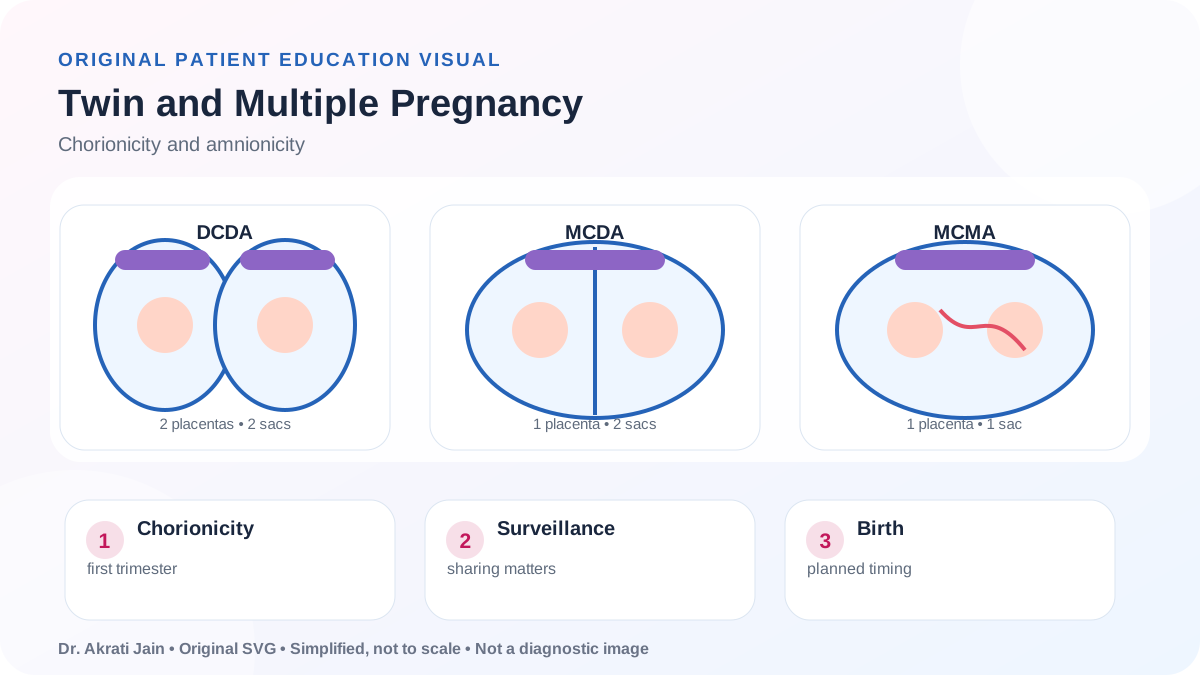
Dichorionic twins have separate placentas; monochorionic twins share one. Diamniotic twins have separate sacs; monoamniotic twins share a sac. These distinctions affect surveillance and birth planning more than whether the twins are identical.
The lambda and T signs on first-trimester ultrasound help determine placental sharing. When uncertain, the pregnancy is managed cautiously.
Maternal and fetal risks
Maternal risks include anaemia, hyperemesis, hypertension, gestational diabetes, thrombosis and postpartum haemorrhage. Fetal risks include preterm birth, growth discordance and complications unique to a shared placenta.
Monochorionic twins are monitored for twin-to-twin transfusion syndrome, selective growth restriction and twin anaemia–polycythaemia sequence.
Scan schedule and growth
The scan frequency is based on chorionicity. Growth is assessed for each baby and the percentage weight discordance is calculated. Significant discordance or abnormal Doppler findings prompt specialist review.
One fetal demise, major anomaly or severe growth difference requires fetal-medicine counselling because risks and options depend strongly on placental sharing.
Birth planning
Timing and mode of birth depend on chorionicity, presentation of the first baby, gestation, growth and complications. Vaginal birth can be appropriate for selected twin pregnancies when the first baby is head-down and an experienced team is available.
Neonatal care, analgesia, continuous monitoring and management of the third stage are planned in advance because preterm birth and postpartum haemorrhage are more common.
Placental sharing changes the plan
DCDA
Two placentas and two sacs; lower shared-placenta risk but still needs twin-specific growth surveillance.
MCDA
One placenta and two sacs; requires frequent monitoring for transfusion and growth complications.
MCMA
One placenta and one sac; rare and highest risk, requiring specialist fetal-medicine care.