Prelabour rupture of membranes means the waters break before labour starts. When it occurs before 37 weeks it is PPROM. The main concerns are infection, preterm birth, cord prolapse and reduced fluid around the baby.
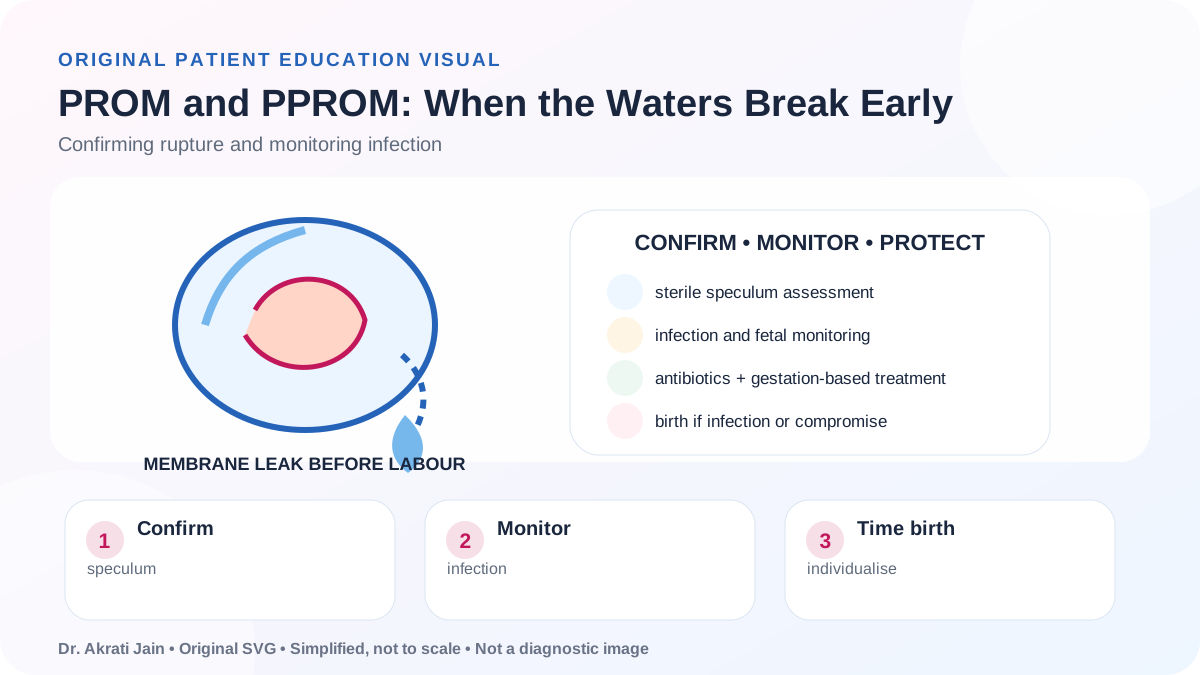
RCOG Green-top 73: diagnosis and expectant care
RCOG guidance supports close surveillance and, when mother and baby remain well, expectant management rather than automatic immediate birth.
- Diagnosis starts with history and sterile speculum examination; selected vaginal-fluid tests may be used if no fluid is seen and uncertainty remains.
- Clinical assessment, maternal blood tests and fetal heart rate are considered together for infection—no single marker is sufficient.
- A course of antibiotics is offered after confirmed PPROM; corticosteroids and magnesium sulfate are offered or considered according to gestation and likelihood of birth.
- Tocolysis is not routinely recommended for PPROM, and immediate birth is required if infection, significant bleeding, cord prolapse or fetal compromise develops.
What leakage can feel like
Fluid may be a large gush or a persistent trickle. It can be confused with urine or increased vaginal discharge. Note the time, amount, colour and smell; use a pad rather than a tampon and contact maternity services.
Green, brown, bloody or offensive fluid, fever, pain or reduced fetal movement is particularly concerning.
How PPROM is confirmed
The clinician checks temperature, pulse, blood pressure and fetal heart rate. A sterile speculum examination looks for fluid pooling from the cervix. A swab-based biochemical test may help if the diagnosis remains uncertain.
Ultrasound can estimate fluid and fetal growth but does not by itself prove or disprove membrane rupture.
Monitoring and treatment
Hospital observation is common initially. Monitoring looks for uterine infection, labour, bleeding and fetal compromise. Antibiotics reduce infection risk and may prolong pregnancy.
Corticosteroids support fetal maturation when preterm birth is likely. Magnesium sulfate may be used for neuroprotection at very preterm gestations. Patients should receive neonatal counselling when appropriate.
When birth is recommended
Immediate birth may be needed for chorioamnionitis, placental abruption, cord prolapse, non-reassuring fetal status or established labour. If stable, the benefit of continuing pregnancy is balanced against infection and gestational-age risks.
Timing varies with gestation, GBS status, symptoms and local protocols. A vaginal birth is often possible if there is no other obstetric reason for caesarean.
Home safety-net after confirmed PPROM
Temperature and wellbeing
Fever, chills, flu-like illness or increasing lower-abdominal pain can indicate infection.
Fluid and bleeding
Offensive, green or bloody fluid, or fresh bleeding, needs urgent review.
Baby and contractions
Reduced movement, cord felt in the vagina or regular contractions require immediate maternity assessment.