Preterm labour is labour before 37 completed weeks. Many patients with contractions do not deliver immediately, so assessment aims to distinguish transient symptoms from cervical change while not delaying time-sensitive treatments when birth is likely.
NICE NG25 and RCOG Green-top 74
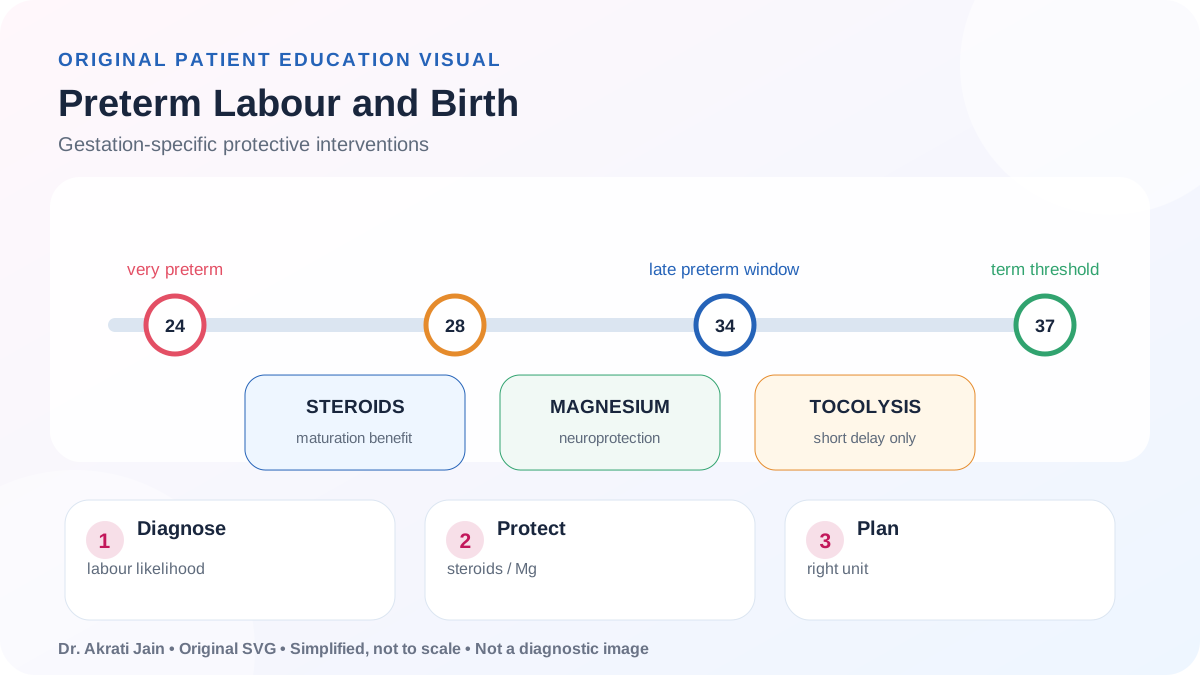
Current guidance focuses on accurate diagnosis, neonatal benefit from timely corticosteroids and transfer to an appropriate maternity unit when feasible.
- Antenatal corticosteroids are most beneficial when birth occurs roughly 24 hours to 7 days after treatment, especially at earlier preterm gestations.
- Magnesium sulfate may be offered for fetal neuroprotection when very preterm birth is imminent.
- Tocolysis can sometimes delay birth briefly to complete steroids or transfer, but it does not permanently stop the underlying process.
- If membranes are intact, cervical length or an accepted biochemical test may guide diagnosis; supply and availability of some tests have changed.
Symptoms and assessment
Symptoms include regular tightening, period-like cramps, low back pain, pelvic pressure, bleeding or a change in discharge. A gush or trickle of fluid raises concern for PPROM.
Assessment includes maternal observations, fetal heart rate, abdominal examination and a speculum examination where appropriate. Urine and infection tests may be needed. The cervix may be assessed clinically or with transvaginal ultrasound.
Treatments for the baby
Corticosteroids accelerate fetal lung and organ maturation. Magnesium sulfate is used near anticipated very preterm birth to reduce cerebral-palsy risk. Neonatal-team counselling explains likely care by gestational age.
These treatments are offered when the chance of early birth is meaningful; unnecessary repeated courses are avoided.
Treatments to buy time or treat causes
A tocolytic may delay contractions for a short period when there is no contraindication. It is generally avoided with infection, significant bleeding, severe pre-eclampsia or fetal compromise.
Antibiotics are used for PPROM and specific infection indications, but not routinely for uncomplicated preterm labour with intact membranes.
Birth planning and prevention later
If birth appears imminent, care is coordinated with neonatal services and transfer to a unit with suitable neonatal capability is considered when safe. Mode of birth depends on presentation, gestation and fetal/maternal condition.
Future prevention may include cervical-length surveillance, vaginal progesterone or cervical cerclage for selected patients based on history and findings. Routine bed rest is not an effective preventive treatment and has harms.
What each intervention is trying to achieve
Steroids
Reduce complications of prematurity when birth is likely soon.
Magnesium sulfate
Provides fetal neuroprotection at very preterm gestations.
Tocolysis
Creates a short window for steroids or transfer; it is not a cure for preterm labour.