In vitro fertilisation (IVF) involves stimulating the ovaries, collecting eggs, fertilising them in a laboratory and transferring an embryo or freezing embryos for later use. Every step has uncertainty, so counselling should distinguish egg numbers, embryo development and live-birth probability.
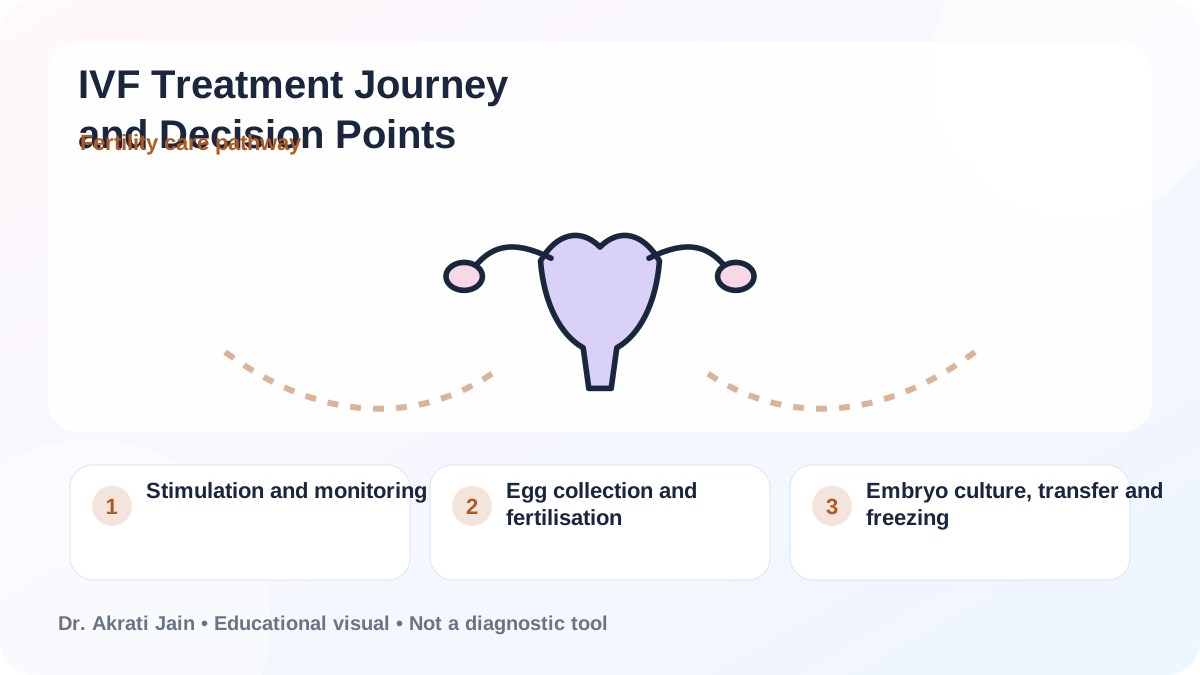
Stimulation and monitoring
Daily medicines recruit multiple follicles. Ultrasound and sometimes blood tests guide dose and timing. The protocol is chosen to balance response with the risk of ovarian hyperstimulation.
Egg collection and fertilisation
Egg collection is performed with analgesia or sedation according to the clinic. Conventional IVF or intracytoplasmic sperm injection may be used depending on sperm factors and prior fertilisation history. Not every follicle contains an egg and not every egg fertilises.
Embryo culture, transfer and freezing
Embryos are observed over several days. Transfer strategy considers age, embryo quality, uterine factors and multiple-pregnancy risk. Suitable embryos may be frozen. Genetic testing is useful only in selected contexts and has limitations.
After the cycle
The pregnancy test is performed on the clinic’s schedule. Whether the cycle succeeds or not, a review should explain response, fertilisation, embryo development and what changes are evidence-based for another attempt.
Questions worth discussing at your consultation
- What live-birth estimate applies to my age and diagnosis?
- Why is this stimulation and fertilisation method recommended?
- What is the single-embryo transfer strategy?
- How will embryos, storage and future use be managed?