This original patient guide supports an informed consultation and does not provide a diagnosis or individual treatment plan.
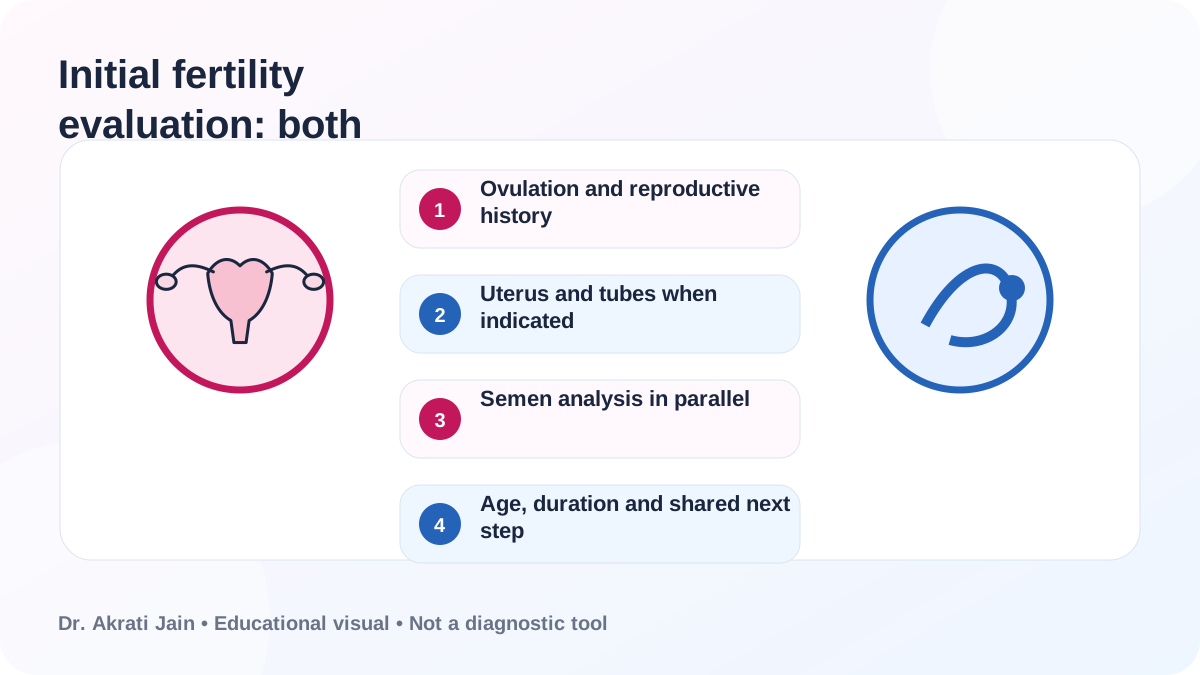
Evaluate both partners systematically and without unnecessary delay
A fertility evaluation should identify common, treatable factors using the least invasive useful tests first.
- Evaluation is generally started after 12 months of regular unprotected intercourse when the woman is under 35, after 6 months at age 35 or older, and sooner when a known risk factor exists.
- Assessment should consider ovulation, ovarian and reproductive history, the uterine cavity and tubal patency when indicated, and semen analysis in parallel.
- AMH and antral follicle count help estimate response to ovarian stimulation; they do not reliably predict natural conception by themselves.
- The next step should be linked to the couple’s age, duration of trying, diagnosis, reproductive goals, and the balance between expectant care, ovulation induction, IUI, IVF, or surgery.
Understanding the concern
Initial Fertility Evaluation may present differently from person to person. Symptoms, age, menstrual pattern, pregnancy plans and previous treatment all influence the evaluation.
Evaluation
A consultation may include symptom history, examination and selected blood tests or imaging. The aim is to identify likely causes while avoiding unnecessary tests.
Treatment choices
Options can include observation, lifestyle measures, medicines, physiotherapy or procedures. The best choice depends on symptom impact, clinical findings and personal goals.
A complete fertility work-up
Evaluate both partners
Ovulation, ovarian reserve, tubal patency and uterine factors are assessed alongside semen analysis. Focusing only on the woman delays diagnosis in many couples.
Time matters differently by age
The duration of trying is important, but earlier referral is appropriate with increasing age, irregular cycles, previous pelvic surgery, endometriosis or known male-factor concerns.
Every test should change a decision
Reserve testing predicts response more than natural conception; tubal tests answer patency, and semen results may need confirmation. Results should lead to a clear treatment pathway.